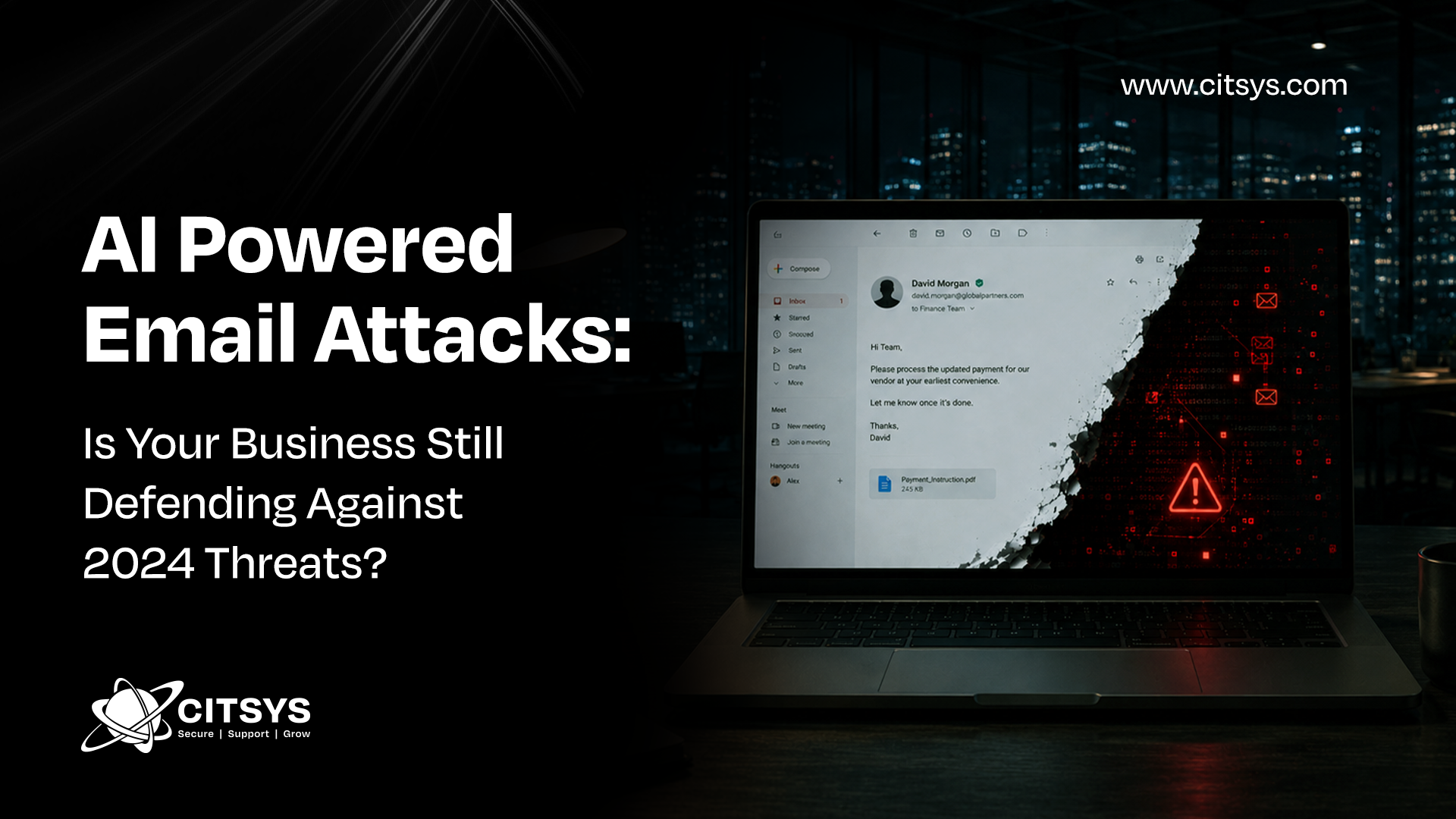
There was a time when spotting a fraudulent email was almost reassuring in its simplicity. The grammar was off, the sender’s address looked suspicious and the urgency felt manufactured. A quick second look was usually enough. But as we move through 2026, that era is effectively over.
How Generative AI Has Flipped the Script
Attackers are no longer trying to blast millions of generic messages, hoping someone will click. They are scraping LinkedIn profiles, company websites and social media to craft messages that reference real projects, colleagues and business relationships. The email that asks a finance officer to process an updated invoice is not random; it has been built around that officer’s role, their organization’s recent activity and the name of a supplier they actually work with.
Generative AI now allows attackers to produce these personalized campaigns at scale, creating hundreds or thousands of unique message variants in the time it once took to write one. Traditional email filters were built to detect patterns and repetition, so when no two emails in a campaign are identical in subject line, wording, or formatting, signature-based detection systems have very little to work with.
Furthermore, IBM’s 2025 Cost of a Data Breach Report indicates that phishing has become the #1 initial attack vector, with the average breach cost now sitting at $4.44 million globally and significantly higher for regulated industries.
Compliance and the Ghana Data Protection Commission (DPC)
For businesses in Ghana, this isn’t just an operational risk, it’s a regulatory one. The Data Protection Commission (DPC) has entered a phase of strict enforcement in 2026.
The real vulnerability isn’t just technology; it’s verification protocol. Many processes were built when impersonation was hard. Today, we must assume any digital thread can be fabricated.
The “Zero-Trust” Verification Checklist:
Out-of-Band Confirmation: Changes to vendor bank details must be verified via a separately initiated phone call to a known number, never a reply to the email.
Multi-Person Authorization: No single individual should authorize significant payments based on a digital request alone.
Internal Code Words: For high-stakes video or voice calls, consider using internal “challenge-response” questions that an AI wouldn’t know.
Rethinking the Human Side
The human response to authority has not changed, even as the ability to fake authority has improved enormously. In over 60% of phishing emails, attackers impersonate a well-known brand or entity, and display name manipulation was observed in 36% of business email compromise emails in one study. (Hoxhunt, 2026)
Most employees are not trained to resist that social pressure in the moment. Addressing this requires organizations to create explicit permission structures where employees know they are expected to verify unusual instructions regardless of apparent seniority, and where doing so is treated as responsible behavior rather than an inconvenience.
The Practical Response
Email security tools that use behavioral analysis and anomaly detection perform better against AI-generated attacks than those relying on pattern-matching alone and the investment is worth making. Beyond the technology, organizations should establish verification channels that exist entirely separately from email and where deepfake risk is relevant, consider introducing internal code words or pre-agreed questions that only genuine contacts would know.
Training also needs to reflect current attack methods. The more meaningful metric is whether employees are actively reporting suspicious messages, not simply avoiding clicks.
Those are different behaviors and the first one signals a security culture that is actually working. Organizations that manage this threat well will do so because they treat email security as an ongoing operational discipline, one where the human layer is as actively engaged as the technological aspects.